



The Manufacturing Process of Welding Electrodes
Welding electrodes are a basic requirement in fabrication, construction, repair work, and heavy engineering. The quality of the weld always depends on the quality of the electrode. Because of this, the manufacturing process is carried out with careful planning and strict control at every stage. Experienced welding electrode manufactures in India follow a step by step system to make sure every electrode performs well in real working conditions.
Raw Material Selection for the Manufacturing process of welding electrodes
The process starts with the selection of the core wire. This wire is usually made from mild steel or other metals based on the type of electrode to be produced. The chemical composition of the wire must be accurate because it directly affects the strength of the weld.
The coating materials are also selected with equal care. These include minerals, metal powders, and binding materials. Each ingredient has a specific purpose such as arc stability, slag formation, and protection of the weld metal from air.
If the raw materials are not correct, the final product will not give consistent results. That is why reliable welding electrode manufactures in India work only with tested and approved sources.
Wire Drawing and Cutting for the Manufacturing process of welding electrode
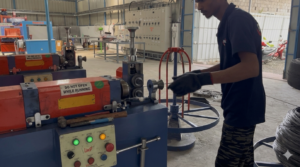
The steel wire received from suppliers is not used directly. It is first drawn through a series of dies to bring it to the required diameter. This process improves the surface finish and gives the wire the correct size.
After this, the wire is cut into straight lengths based on the electrode size. Straight wire is important because it allows even coating and smooth feeding during welding.
Flux Preparation for the Manufacturing process of welding electrodes
The flux coating is what makes the electrode function properly. The raw materials for the coating are measured in the right proportion and mixed in a controlled environment.
A binding solution is added to make a paste. The consistency of this paste is very important. If it is too thick or too soft, the coating will not sit properly on the wire.
This stage requires experience because the performance of the electrode depends on the correct coating formulation.
Coating of the Electrode for the Manufacturing process of welding electrodes
The coating process is done using an extrusion machine. In this machine the paste is pressed around the core wire to form a uniform layer.
The thickness of the coating is maintained according to the type of electrode. A uniform coating helps in smooth arc starting, stable welding, and proper slag formation.
Any variation at this stage can affect welding performance, so the process is closely monitored.
Drying for the Manufacturing process of welding electrodes
After coating, the electrodes contain moisture. These coated electrodes are placed in drying ovens to remove excess moisture.
Drying is done at a controlled temperature for a specific time. This step prevents cracks in the coating and prepares the electrodes for the next stage.
Baking for the Manufacturing process of welding electrodes
Once the initial drying is complete, the electrodes are baked at a higher temperature. This gives strength to the coating and reduces the moisture content to a very low level.
Low moisture is important to avoid weld defects such as cracking and porosity. Proper baking also improves the shelf life of the electrode.
Leading welding electrode manufactures in India use temperature controlled furnaces to make sure the heat is uniform for the entire batch.
Testing and Quality Check for the Manufacturing process of welding electrodes
Quality testing is done before the electrodes are packed. Samples from each batch are tested for welding performance.
The common checks include arc stability, slag removal, weld bead appearance, and mechanical strength. Moisture content and coating adhesion are also tested.
This stage ensures that the electrodes will perform well at the customer’s site.
Printing and Identification for the Manufacturing process of welding electrodes
After approval, the electrodes are marked with their grade, size, and brand name. This helps users identify the correct product for their work.
Clear marking also helps in traceability and quality control.
Packaging for the Manufacturing process of welding electrodes
The finished electrodes are packed in moisture resistant boxes. Proper packing protects them from humidity and damage during transport and storage.
Storage in dry conditions is always recommended to maintain performance.
Why the Manufacturing Process Matters
A welding electrode may look simple, but its performance depends on how well it is made. A small mistake in raw material, coating, or baking can affect the weld quality.
A well controlled process gives:
Stable arc
Smooth welding
Strong joints
Less spatter
Better productivity
This is the reason industries prefer products from trusted welding electrode manufactures in India who follow a consistent manufacturing system.
Conclusion
The Manufacturing Process of Welding Electrodes is a critical factor in determining welding strength, durability, and overall performance. From selecting high-quality raw materials and precision core wire drawing to uniform flux coating, controlled drying, and strict quality testing, each stage ensures reliable and consistent welding results. As industrial demand continues to grow, welding electrode manufactures in Kerala are focusing on advanced production technology, quality assurance standards, and cost-effective solutions to meet both domestic and international market needs. By choosing experienced and certified manufacturers, businesses can ensure superior welding efficiency, safety, and long-lasting structural integrity.